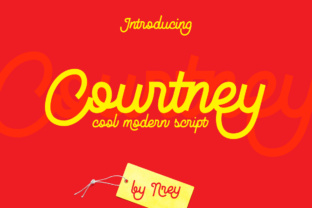
Discover the Timeless Appeal of Courtney
If you're looking for a font that blends retro charm with modern versatility, Courtney is a standout choice. This cursive script font offers a monoline style with sharp edges, making it ideal for headlines and logotypes that demand a refined yet stylized look. Whether you're designing a brand, creating marketing materials, or working on a personal project, Courtney can add a unique touch that sets your work apart.
What Makes Courtney Unique
Courtney is more than just a font—it's a design element that brings character to any visual project. Its cursive style gives it a handwritten feel, while the monoline structure ensures consistency and clarity. The sharp edges add a sense of precision, making it suitable for both casual and professional applications. Unlike many other script fonts that can be difficult to read in small sizes, Courtney maintains legibility even at lower point sizes, which is a big plus for designers looking for a balance between aesthetics and functionality.
Real-World Applications of Courtney
One of the most common uses for Courtney is in branding. Businesses that want to convey a sense of nostalgia or sophistication often turn to this font for their logos and taglines. For example, a boutique coffee shop might use Courtney in its logo to evoke a warm, artisanal feel. Similarly, a vintage clothing store could use it in its signage to reinforce its retro aesthetic.
In the world of print media, Courtney can be a game-changer. Magazines, newspapers, and brochures often use it for headlines to draw attention and add visual interest. Its cursive style makes it perfect for titles that need to stand out without being too flashy. For instance, a fashion magazine might use Courtney for a feature on 1970s fashion to create an immediate connection with the era.
Digital designers also find Courtney useful. From website headers to social media graphics, this font adds a touch of elegance that can elevate the overall look of a design. It works well in both dark and light themes, making it adaptable to different design contexts. A designer working on a portfolio site might use Courtney for the main heading to create a memorable first impression.
Who Benefits from Using Courtney?
Graphic designers are among the biggest beneficiaries of Courtney. Its versatility allows them to experiment with different layouts and compositions while maintaining a cohesive visual identity. For those who specialize in branding or editorial design, Courtney can be a go-to font for creating visually appealing content that resonates with audiences.
Entrepreneurs and small business owners can also benefit from using Courtney. Many startups and independent businesses use custom fonts to differentiate themselves from competitors. By incorporating Courtney into their branding, they can create a unique identity that reflects their values and vision. A handmade soap company, for example, might use Courtney in its packaging to emphasize the artisanal nature of its products.
Content creators and influencers often use Courtney in their visual content to add a personal touch. Whether it's a YouTube thumbnail, Instagram post, or blog header, the font can help convey a specific mood or message. A lifestyle blogger might use it in a post about vintage fashion to reinforce the theme and attract like-minded readers.
Considerations Before Using Courtney
While Courtney is a powerful tool, it's important to consider a few factors before using it. First, ensure that the font is available in the right format for your project. Most fonts come in standard formats like OTF or TTF, but some may require additional licensing for commercial use. Always check the license agreement to avoid any legal issues.
Another consideration is the context in which the font will be used. While Courtney works well in headlines and logotypes, it may not be the best choice for body text. Its cursive style can make long paragraphs harder to read, so it's best reserved for short phrases or decorative elements. If you're unsure, test the font in different sizes and settings to see how it performs.
Finally, think about the overall design. Courtney has a distinct style, so it should complement the rest of the visuals rather than clash with them. Pairing it with simpler fonts or neutral colors can help balance the composition and ensure that the message remains clear and effective.
Strengths and Limitations of Courtney
Courtney's strengths lie in its versatility and visual appeal. Its monoline structure makes it easy to work with, while its cursive style adds a personal, handcrafted feel. It's particularly effective in projects that require a retro or elegant aesthetic. Additionally, its legibility at smaller sizes makes it a practical choice for a wide range of applications.
However, there are some limitations to consider. As mentioned earlier, it's not ideal for large blocks of text. It also requires careful pairing with other design elements to avoid overwhelming the viewer. In some cases, the sharp edges of the letters may not align with the intended tone of a project, especially if a softer or more organic look is needed.
Despite these limitations, Courtney remains a popular choice for designers and creatives who want to add a touch of personality to their work. Its ability to blend retro charm with modern design makes it a valuable asset in any creative toolkit.